
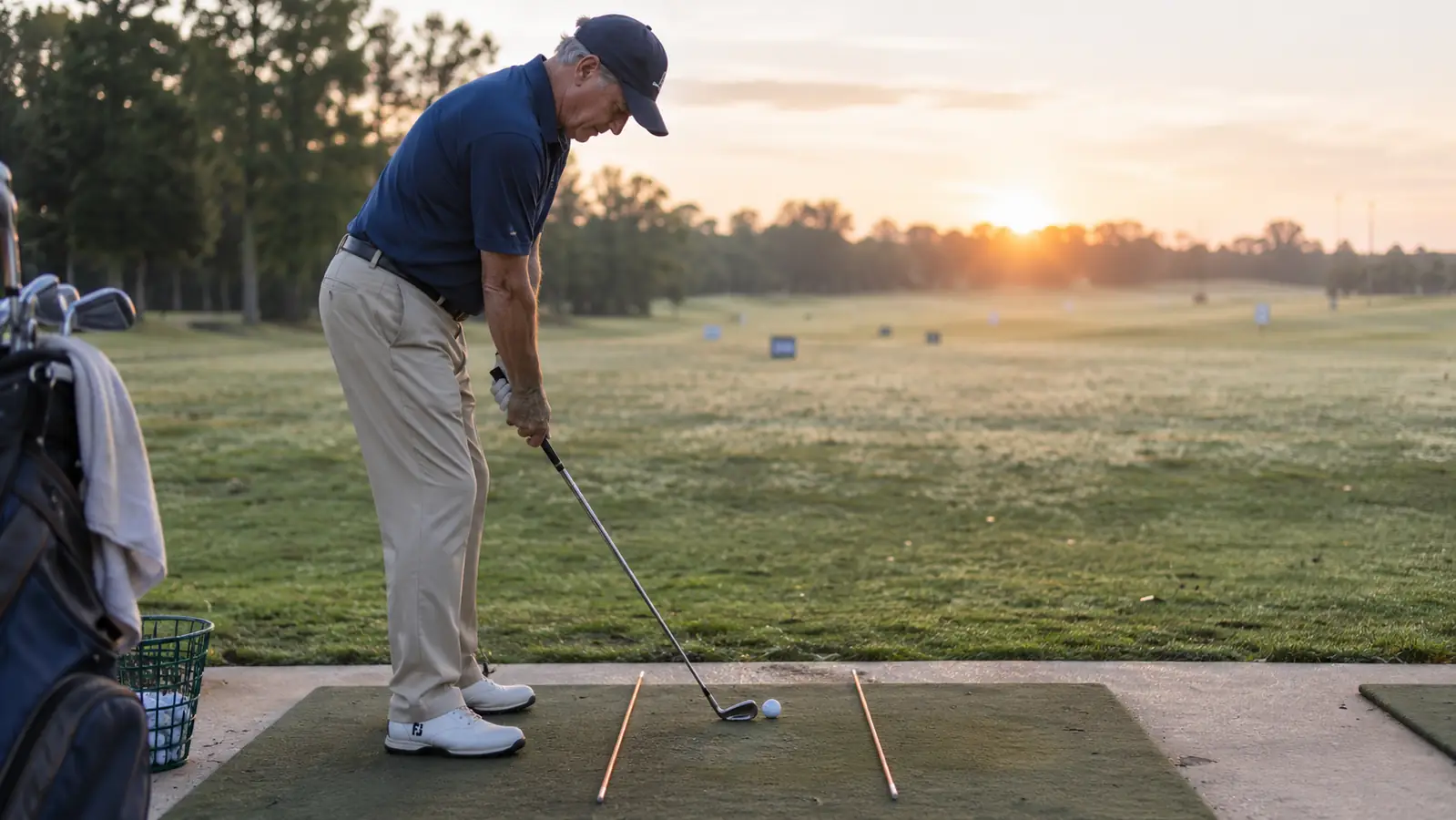
For twenty-five years I aimed my golf shots the same way. Pick a spot out in the distance, set my feet at it, and trust that the rest of me would follow. The rest of me does not follow. My shoulders end up pointed off toward the trees, my hips point somewhere else again, and by the time the club comes down I am making a small, quiet correction that ruins the shot.
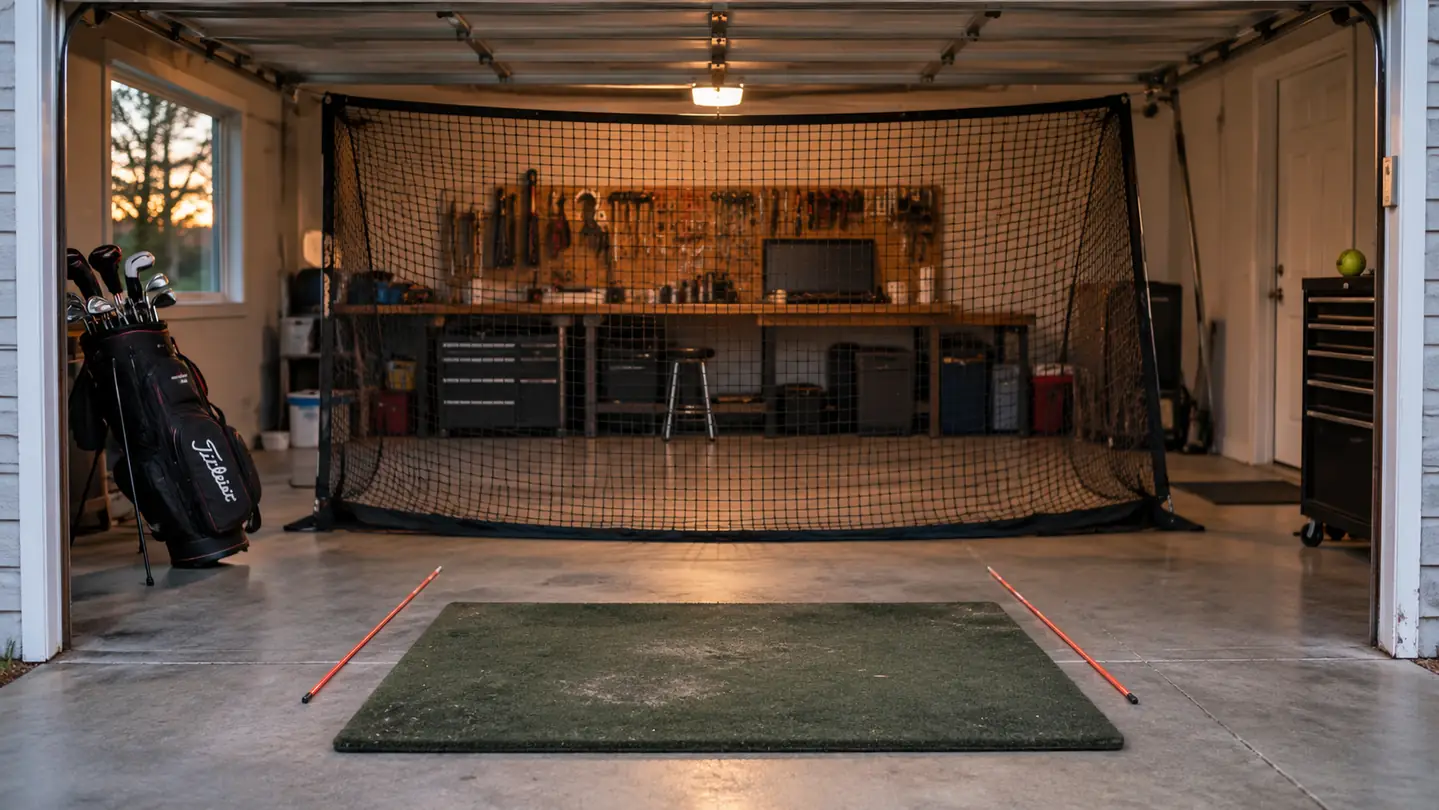
I own a sign shop in central Ohio. I am 57, and I play in a Thursday evening league I have belonged to for a quarter of a century. My handicap sits around 14 and has sat around 14 for a long while. I hit balls at a public range most Saturday mornings, and I have a net and a mat in the detached garage for the nights when I do not feel like driving anywhere. I am not a gadget guy, and most of what I have bought over the years lives in a bucket in the corner of that garage. The Seticek alignment sticks were nearly one of those, until I finally used them the way they are meant to be used.
What got my attention was not my score. It was my lower back, which tightens up after a long range session and is worse the next morning. My doctor looked at it years ago and called it ordinary muscle strain and stiffness, nothing surgical. So I started paying closer attention to how I set up, and I noticed I had been rehearsing the same crooked setup a hundred times a session without ever knowing it.
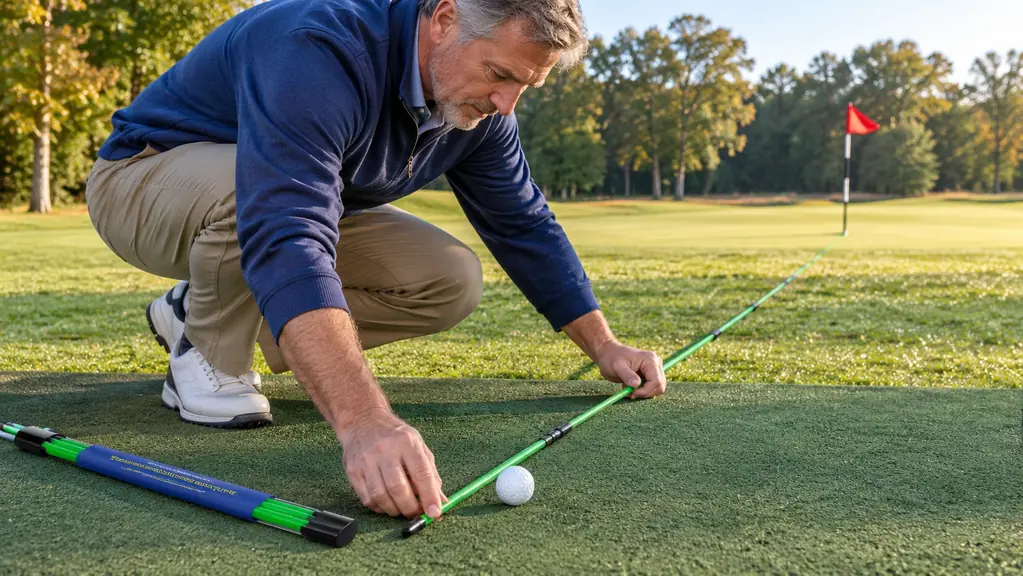
That is where the Seticek sticks came in properly. Two glass fiber sticks, 48 inches unfolded, folding down to 17 inches so they slide into a golf bag, at 91 grams each. Light enough that I forget I am carrying them. They are not a launch monitor and they will not tell you your numbers. They are two straight lines you can put on the ground and across your chest, and that turned out to be the part I was missing.
First session out, I laid one stick on the mat pointing at my target and set my feet parallel to it. Humbling. My normal setup was aimed a good fifteen yards right of where I had assumed it was. Then I held the second stick across my shoulders and looked down at the one on the ground. Shoulders, hips and feet are all supposed to point at the same place. Two out of three were not.
I hit maybe thirty balls that way, checking the shoulder stick every few swings. By the end of the bucket I could feel the difference without looking down. Not a new swing. The same old swing, pointed where I thought it was pointed.
The sticks did not fix my swing. They showed me what my swing was actually doing, which is a different and more useful thing.
Two straight lines, and a target you can finally see
The Seticek two-pack: glass fiber, 48 inches unfolded, folds down to 17 inches for the bag, 91 grams each. Rated 4.5 across 670 reviews. Cheaper than one bucket of range balls.
Amazon Check Today's Price on Amazon →The surprise was how much of this I could do indoors. In the garage I lay one stick down on the mat as my target line, set my feet to it, and hit wedges into the net for fifteen minutes after dinner. The fold is what makes that practical. They come down to 17 inches, so the pair lives in the side pocket of my bag and I am not making a separate trip to fetch them.
The Part Nobody Mentions
Alignment sticks do not fix anything. Nobody sells that honestly, so I will say it plainly. They are a mirror. If your setup is fine, they will tell you it is fine and you will be bored of them in a week. Mine was not fine, so they were worth the trouble. The work is still yours, and you still have to swing the club.
I am not going to claim these did anything for my back, because that is not what they are for. What changed is that I stopped rehearsing a twisted setup a hundred times a session, and I now notice when my shoulders drift because I have spent hours looking down at a line that shows me. My back still stiffens after a long range day. It just stiffens less often, and I would rather credit the shorter, more deliberate sessions than the sticks themselves.
There is no warranty on them, which is worth knowing before you order. Glass fiber will not survive being slammed into a cart frame or left leaning where a bag falls on it, so treat them like the thin rods they are. They also carry no markings and no numbers, so if you want data, this is not that purchase. The honest limits are the reason they cost what they cost.
What I'd Tell You If We Were Sitting at My Kitchen Table
I would tell you to skip the expensive training aids for a season and buy the boring thing first. Set one stick on the ground where you actually want the ball to start, set your feet to it, put the other across your shoulders, and look down. Do that twenty times. If you are lined up the way you thought you were, you have learned something worth knowing and you can stop reading. If you are not, you just found the cheapest fix in golf, and it will not care whether you play once a week or five times.
I would also tell you the truth about the ceiling here. My handicap is still around 14. The Seticek sticks did not hand me a lower score and I would not trust anyone who promised one. What they gave me is a setup I can repeat and a way to check it in ten seconds on the range or in my own garage. At 57, with a back that complains, that is the kind of improvement I will take.
Check your aim before you buy another gadget
Two glass fiber sticks, 48 inches unfolded, 17 inches folded, 91 grams each. The cheapest honest feedback in the game, and it fits in the bag you already carry.
Amazon Check Today's Price on Amazon →