
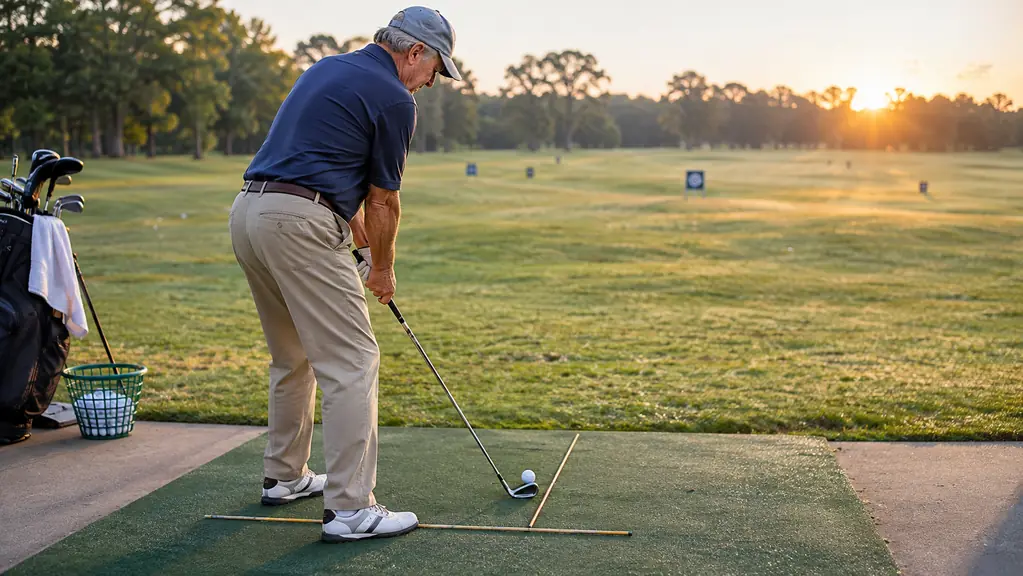
Twenty-five years of Thursday league golf and I finally did the arithmetic on lessons. I have paid for four of them. Every one was useful for about a week. Then my setup slid back to whatever it was before, because the only thing I had to check it against was a memory of a patient man telling me my shoulders were open.
The Seticek 2 Pack 48 inch Golf Alignment Sticks are two fiberglass rods that cost less than a single lesson and never leave your bag. That is the entire pitch. You lay them on the ground, you step to them, and you find out in about four seconds what your feet have been doing behind your back for two decades. I have a garage net, a range habit every Saturday morning, and a lower back that stiffens up after a bucket of balls. This is the rare aid that helps all three.
I tried the free alternatives first, because I am cheap. A club shaft laid on the ground works until you need the club. An alignment line on the range mat is somebody else's line, aimed at somebody else's target. A playing partner standing behind you is worth a lot, and he is also at work on Wednesday. The sticks solve the boring version of the problem, which is that you need the same reference point every single session and you need it to fold up small enough that you actually bring it.
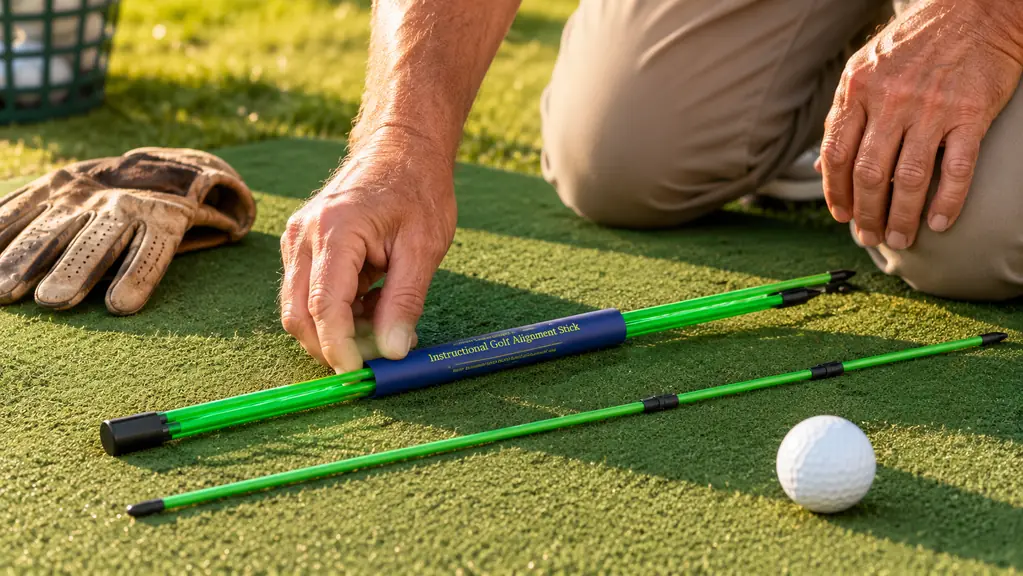
Two sticks, 48 inches unfolded, 17 folded. That is the whole kit.
Fiberglass, 91 grams each, two in the pack. One for the target line, one across your toes.
Amazon Check the Seticek 2-pack on Amazon →Your aim error shows up before you ever swing
My habit was to pick a spot three feet ahead of the ball, then set up and trust my feet went where my eyes went. They did not. With one stick down on the target line and a second across your toes, the gap is right there in the grass, usually with your feet aimed well right of where you swore they were. No screen, no battery, no calibration. Seticek puts two sticks in the pack, so one holds the target line and one holds your foot line, and you see the trouble before you take the club back.
Your shoulders finally have something to match your feet
Open shoulders are my number one problem and I did not know that for about fifteen years. The fix is not complicated. Get your feet square to a stick, then get your shoulders square to the same stick, and the ugly feeling in your chest is the correct position. It feels wrong because it is new. The Seticek sticks are long enough at 48 inches that both lines stay in your field of view while you are standing over the ball, which is the part a single short rod cannot do.
A setup check takes four seconds instead of four minutes
The reason I stopped doing alignment work is that it was slow. Dig the phone out, film a swing, watch it, feel bad, hit another ball. Unfolding a stick and dropping it on the mat is genuinely a four second job, and folding it up again is two. When the check is that cheap, you do it on every ball instead of the first three and then forget. Cheap checks are the ones that actually get repeated.
Folds to 17 inches and disappears into the bag
Unfolded these run 48 inches, long enough to lie along a target line and still be in your eyeline at address. Folded they measure 17 inches, which slides into the side pocket of a golf bag without a fight. I have owned training aids that lived in the garage because they did not fit in anything, and a training aid in the garage trains nothing. Mine rides in the bag next to the rain gloves, and that is the only reason it gets used at the range on Saturday.
At 91 grams, you will not notice it in the bag
Each stick weighs 91 grams. I am not going to pretend I can feel that in a bag with fourteen clubs in it, and that is the point. It adds nothing you have to carry and nothing you have to think about. My push cart already weighs more than I want it to and my back lets me know about it on the walk up nine. Two light sticks and a folded 17 inch package at 0.26 kg total is not the thing that hurts.
Putting practice finally gets a real gate
Lay two sticks parallel on the practice green about a putter head apart and you have a gate that tells you the truth about your stroke. Miss the gate and you know before the ball ever gets to the hole. I do twenty of these before league now, not because I think it makes me a better putter overnight, but because it shows me whether my hands are quiet that day. Some days they are not, and it is good to learn that on the practice green instead of the first tee.
It tells you whether the problem is aim or path
This is the part that saved me money. If your aim is square against a stick and the ball still curves, then the setup is not your problem, and no amount of lining up will fix it. That is a lesson problem. If your aim is square and the ball goes straight, then you were aiming badly the whole time and you just fixed it for free. Knowing which of those two you are is worth more than another hour on the lesson tee.
You can work on it in the garage without hitting a ball
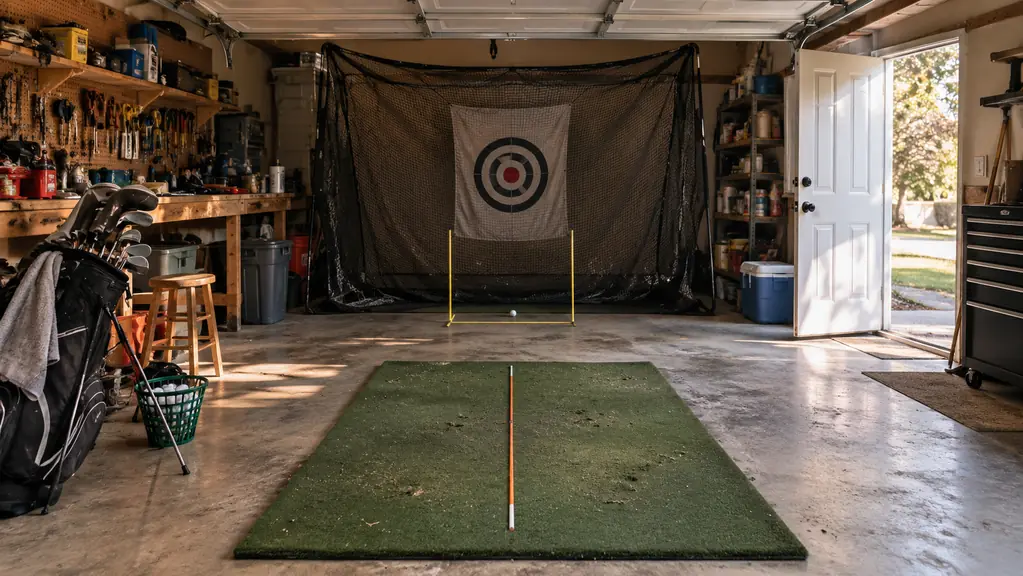
My garage has a net and a mat, and on the bad back days I do not want to hit eighty balls into it. So I set up, check the feet, check the shoulders, step away, reset. Ten of those takes four minutes and costs my back nothing. It is the least glamorous practice in golf and it has done more for my consistency than any bucket I have hit this year. The sticks do not care whether a ball is involved.
It catches the drift before it becomes a habit
Setup problems do not announce themselves, they accumulate. Two weeks of aim drifting right turns into a swing that compensates, and then you are standing on the range trying to fix a swing when the actual fault is in your feet. A four second check a couple of times a session catches the drift while it is still small. This is the cheapest early warning system I have found for a game that otherwise only tells you something is wrong three holes later.
Two sticks means one stays home and one stays in the bag
A two-pack sounds like marketing until you have lost a single training aid to the garage shelf. Mine split up the first week. One lives in the golf bag for the range and league warmups, the other lives against the wall by the net. Nothing gets left behind and nothing has to be remembered. If you only ever buy one of these things, that is the reason to buy the pair instead.
What I'd Skip
These are alignment sticks made of glass fiber with no warranty from Seticek, and they will not teach you a golf swing. If your problem is an over the top move or a flip through impact, a stick on the ground will show you where you are aimed and then politely decline to help further. They also are not indestructible. Glass fiber does not enjoy being hit with an iron, so do not leave one lying behind the ball, and do not leave one in the grass where the mower lives. I would skip the pair entirely if what you want is feedback on your swing path, because that is a lesson or a launch monitor, not a rod. I would also skip it if you are the sort of golfer who buys an aid, uses it twice, and shelves it. The value in these comes from the check being so quick that you do it constantly. Buy them only if you will actually drop one on the mat a few times a week.
I laid one stick on the target line and one across my toes on a Saturday morning, and my feet were aimed a full foot right of where I would have bet money they were. Twenty-five years of league golf, and that was the first time I had actually seen it.
The check costs four seconds. The drift has been costing you years.
Two fiberglass sticks, 48 inches unfolded, 17 folded, 91 grams each. One for the range bag, one for the garage.
Amazon See today's price on Amazon →