
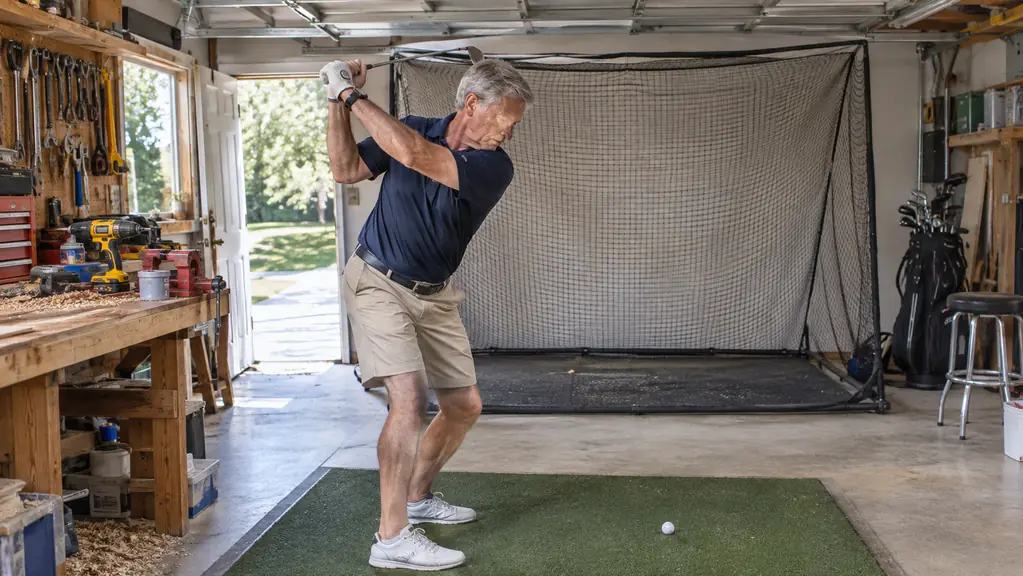
I have played Thursday night league golf in central Ohio for 25 years and carried roughly a 14 handicap the whole way, which tells you I am consistent, not good. My swing has two speeds: quick and quicker. I tried counting in my head. I tried humming a tune on the way back. I tried a metronome app in the garage until my neighbor asked what the beeping was. None of it survived contact with an actual golf ball. The Orange Whip is the first thing that made tempo something I could feel in my hands instead of something I had to remember.
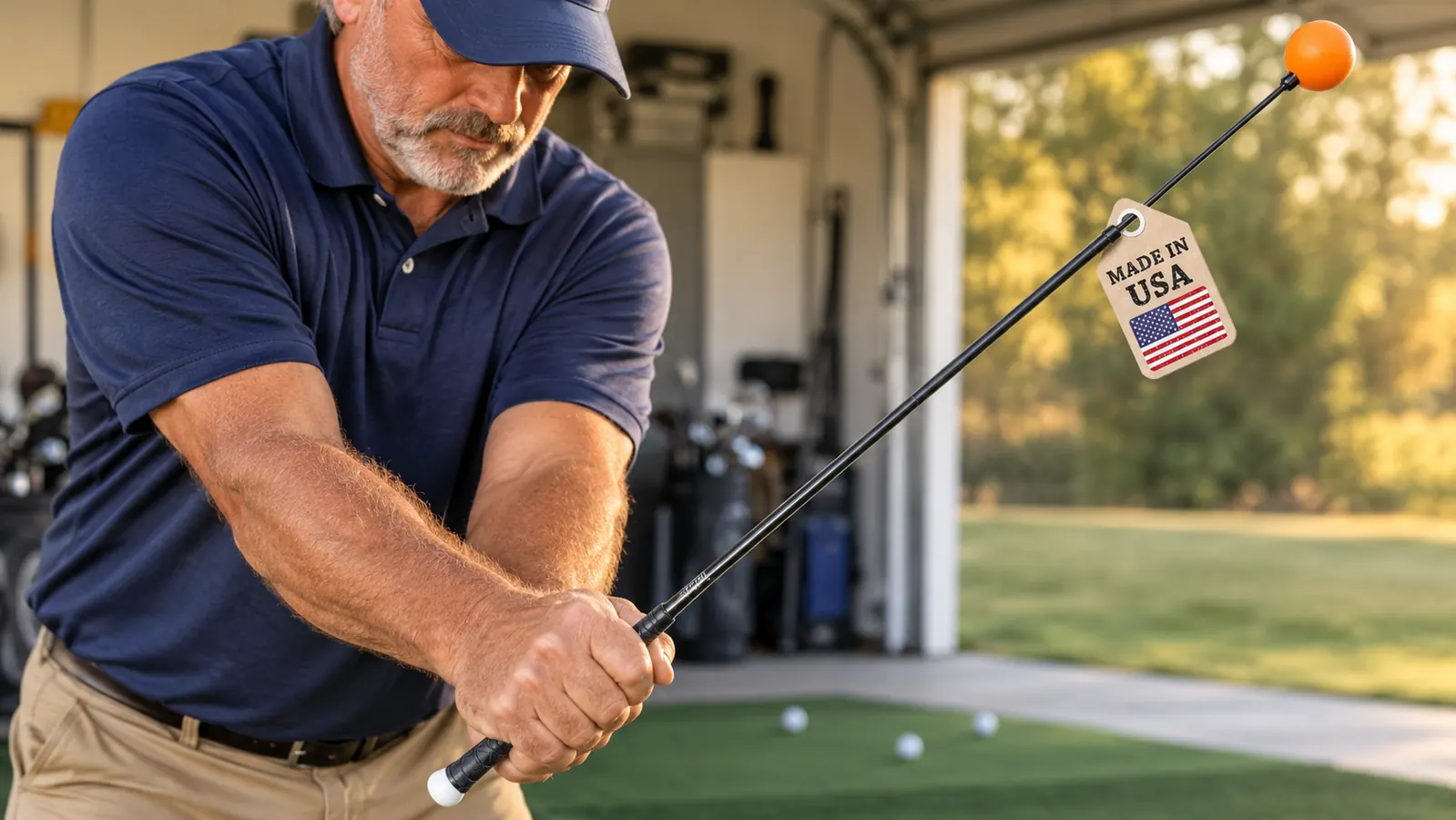
Here is the short version of what it is. A 47 inch training club with a flexible graphite shaft, a weighted head and a synthetic rubber grip in a regular men's size, 1.9 pounds total, ambidextrous, 2 year warranty. You swing it. The shaft bends and pulls your hands into a rhythm whether you cooperate or not. That is the whole trick, and it is enough. Below are ten reasons it earned a permanent spot leaning against the wall of my garage, plus two things it will not do for you.
Start with the same club I swing before every Thursday league round
47 inches, 1.9 pounds, flexible graphite shaft, ambidextrous, 2 year warranty. Ten slow swings in the garage before you touch a real ball. That is the entire routine.
Amazon Check Today's Price on Amazon →Puts a tempo in your hands that you can feel without counting
Counting works right up until you are standing over a real shot with a creek on the left. Then the counting stops and the hands take over. The Orange Whip makes the rhythm physical. The flexible shaft bends under the weighted head and drags your hands through on its schedule, not yours. I could feel the lag and the release in my palms. After a dozen swings I could reproduce that feel over a real ball without a number in my head. For a guy who spent 25 years swinging too fast, that is the whole thing in one sentence.
Shows you exactly where your hands quit on the downswing
Most weekend golfers, me included, quit on the shot with the hands somewhere around hip height. The clubhead never catches up. With a stiff shaft you get away with it because nothing tells you. The flexible shaft on this trainer will not let you get away with it. Quit on it and the whole thing wobbles and feels wrong in a way you cannot ignore. Swing through it and it cracks. That feedback is the lesson, and you get it free in your own garage instead of paying for it on the course.
Teaches your arms and hips to fire in the right order
The listing says the flexible shaft coordinates rhythm between your arms, upper body and lower body. That reads like catalog copy until you feel it. Rush the hips and the shaft lags behind. Lead hard with the hands and it feels like the head is dragging through mud. Get the sequence right and the club does the work. I stopped trying to fire my hips harder, which was making my lower back complain after every range session, and started letting the arms and body go together. My back has been less cranky on Saturday mornings since, and that is an observation, not a medical claim.
Turns ten minutes in the garage into a real practice session
This is not a club you take to the course, which is exactly why it gets used. My practice used to be a bucket of balls at the range with no plan and a lot of bad swings. Now the trainer lives next to the hitting net in my garage and I take ten slow swings before I hit anything. Ten swings is about a minute. Ten minutes of that beats the hour I used to spend grinding with nothing in my head but swing harder. It fits the way a working week actually goes, which is not something I can say about most training aids.
Gets your body turning before you ever hit a real ball
On a cold Saturday morning in April, my first few swings are ugly. Shoulders stiff, back tight, tempo somewhere between nervous and panicked. Swinging the Orange Whip a dozen times before I leave the garage gets the turn going with no ball to worry about. I am not a doctor and I am not making a medical claim. I am saying a 1.9 pound club that forces a full shoulder turn is a better warm-up than two lazy practice swings with a 7 iron while I wait for the group ahead.

The 1.9 pound weight makes a full turn feel like actual work
It weighs 1.9 pounds, which does not sound like much until you swing it 20 times. The weighted head pulls on your hands at the top and drags them through at the bottom. If your turn is short and lazy, you know it by swing five. I feel it in my forearms and along my ribs, which is where a real turn should show up. It is not a gym workout. It is enough work that the motion gets your attention every single rep.
Regular men's rubber grip means no glove, no re-grip, no excuses
The grip is synthetic rubber in a regular men's size, and it holds up to a garage full of sawdust better than the grip on my driver does. I do not need a glove to swing it. I do not need to change my setup or move a mat. I walk over, pick it up, swing ten times, set it back down. The lower the barrier to doing a thing, the more likely I am to actually do it, and that goes double at 57 with a sign shop to open in the morning.
Ambidextrous, so the lefty in your foursome can swing the same one
The trainer is ambidextrous, which means the left-handed guy in my Thursday league can use the same club I do. He tried it, found the feel in about six swings, and asked me where I got it. That is as good a review as a piece of training gear gets from a golfer who has heard every pitch twice. It also means if you are a lefty reading this, you are not hunting for a mirrored version or paying extra for one.
Made in the USA with a 2 year warranty, so it outlasts the bargain copies
Graphite shaft, weighted head, 2 year warranty. Mine has been dropped on a concrete garage floor more than once and there is no rattle, no crack, no wobble at the joint. I have bought cheap training aids that snapped inside a month and then sat in the corner until I threw them in the trash. If you are going to swing something 20 times a day, buy the version that survives being leaned against a wall in a shop full of metal shavings.
One club along the top of your bag instead of a trunk full of gadgets
It measures 47 inches, 48 by 4 by 4 overall, so it rides along the top of a golf bag in the trunk without needing its own case. I have tried the gadgets that clip to your arm, the ones that strap your elbows together and the ones that beep at you. Every one of them lived in the trunk until I forgot it existed. This one comes out because using it is easy and it does not require strapping anything to my body before I can start.
What I'd Skip
Two things this will not do, and I would rather tell you now than have you find out in July. It will not fix a slice. If your clubface is open at impact, a flexible trainer teaches you tempo and nothing at all about the face. That is a lesson with a pro who can watch your grip and your path. And it will not give you data. There are no numbers, no sensors, no readout, no app on your phone. It gives you feel, full stop. One more thing from experience: if your back is already flaring, do not grab it and go full speed cold. Half swings first, build up slow. I learned that on a Tuesday and paid for it Wednesday.
Eleven swings with the Orange Whip in my garage told me more about my tempo than a full season of counting in my head ever did.
Ten slow swings before Thursday league is the whole routine
47 inches, 1.9 pounds, flexible graphite shaft, rubber grip, ambidextrous, 2 year warranty. No app, no batteries, no straps. Mine has lived next to the hitting net for two seasons and it still feels the same as the day it arrived.
Amazon Check Today's Price on Amazon →